Will AI Kill Open Source? The Death of Craft in the Age of the Machine

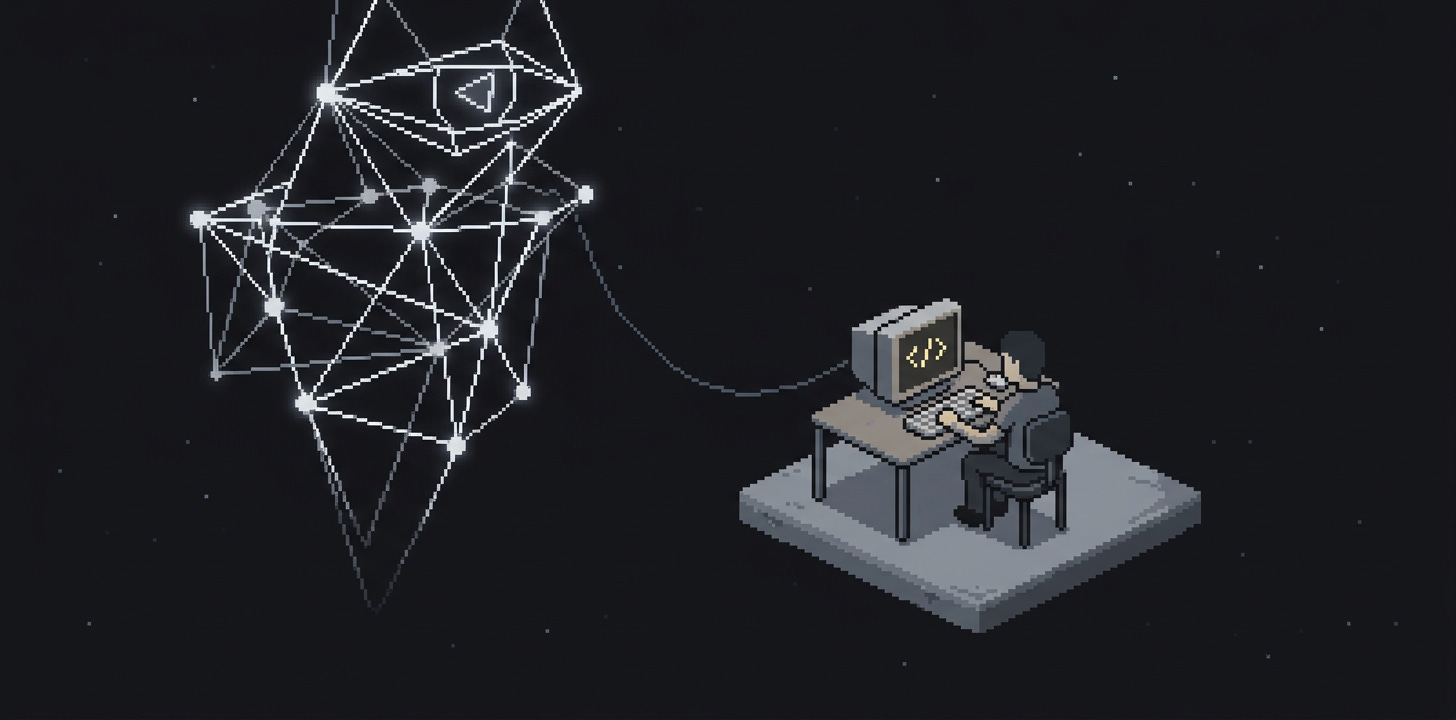
The Great Digital Parasite: Is AI a Symbiote or a Tapeworm?
Let’s be honest: Open source has always been a bit like a public park. Everyone is welcome, most people pick up their trash, and occasionally, a guy with a guitar tries to explain the GPL license to a squirrel. But suddenly, a fleet of giant, shiny, automated harvesters, let’s call them “Generative AI”, has rolled onto the grass. They aren’t just sitting in the park; they are vacuuming up the sod, turning it into artisanal green smoothies, and selling them back to us for $20 a pop.
The existential dread currently vibrating through the halls of GitHub isn’t just about code; it’s about the death of the “Craft.” We are witnessing a model shift where the “Open” in Open Source is being strip-mined for “Intelligence,” and the community? Well, the community is currently being ghosted by an algorithm.
The ‘Clean Room’ Heist: Re-packaging as Innovation
The fundamental grievance is simple: AI companies are the ultimate “Free Riders.” They ingest decades of human ingenuity, the late-night debugging sessions, the unpaid documentation, the blood-sweat-and-tears of maintainers, and spit out “independently recreated” code.
As noted by Heather Meeker, the rise of AI coding agents enables a “clean room” recreation of projects Source. Theoretically, these machines can produce legally distinct code that mirrors the functionality of a GPL-protected library without the “inconvenience” of attribution or sharing back. This isn’t just a loophole; it’s a bypass.
The partnership is gone. In the old world, if I used your code, I gave you a shout-out or contributed a bug fix. In the AI world, the machine takes your code, buffs out the serial numbers, and presents it as a “prompt response.” There is no community in a prompt. There is only a consumer and a black box. The “socially agnostic” nature of permissive licenses (MIT, Apache) has essentially become a suicide pact in the age of LLMs Source.
The Homogenization Crisis: The ‘shadcn’ Effect
Now HERE is this more visible than in design systems. Look at the current state of the web: half of it looks like a `shadcn/ui` template. Why? Because AI is a fantastic copycat but a terrible visionary.
When everyone uses the same AI-assisted design systems, we hit a “peak sameness.” As recent analysis from Peerlist suggests, we are moving away from the “anyone can contribute” ethos toward a curated, closed-off model Source. Companies are realizing that if they want a unique identity, they can’t rely on the open-source commons that the AI has already digested.
To differentiate, companies are beginning to pull their shutters down. They are creating proprietary design systems that are “AI-poisoned” or simply closed-source to ensure that their “look and feel” isn’t immediately commoditized by a competitor’s LLM. The value of craft identity is becoming so high that “Open” is starting to look like a business risk.
The ‘Slop’ Infiltration and the Death of Quality
If the theft of code is the “outbound” problem, “slop” is the “inbound” problem. We are seeing a flood of low-quality, AI-generated contributions, dubbed “slop”, clogging the arteries of major projects Source.
Maintaining a project used to be about managing a community of humans. Now, it’s about defending against a D-DoS attack of mediocre pull requests generated by someone who doesn’t even know what a `null pointer` is but knows how to type “fix bugs” into a chat interface. Even the Linux Kernel has had to formalize rules: you can use AI, but you are legally and technically liable for the carnage it causes Source.
Is There a Pulse?
Is open source dying? No. It’s just moving into its “Gated Community” era.
We are seeing a counter-movement: Open source AI models like Mistral and Qwen are closing the gap with proprietary giants like OpenAI, moving us toward a decentralized model where the tools are run locally Source. The “invisible hand of the market,” as Meeker puts it, makes free paradigms self-actuating Source.
But the craft? The craft is in trouble. When the “how” is replaced by the “what,” we lose the apprenticeship, the mentorship, and the shared struggle that defined the last 30 years of software. We are trading a vibrant bazaar for a very efficient vending machine.
If we want to protect the value of craft, we have to stop treating AI as a teammate and start seeing it as a tool that requires a license. The future isn’t “Open” by default anymore, it’s “Open with Intent.”
~e